Remember the times when you had to turn to programmers to make the slightest change to a site? Now even non-technical specialists can manage content, analyze sales and communicate with customers through a convenient interface. All of this is thanks to admin panels, which have become an integral part of modern business. So what are admin panels, how have they evolved and why is it now impossible to imagine effective business management without them? Let's find out!
What is an admin panel and why does your business need one?
An admin panel is a special interface that lets you manage the content of a website, mobile app or any other digital platform without touching the program code. Think of it as a control panel for your business where all the necessary tools and functions are gathered.
According to McKinsey research, companies that use modern business management tools, including admin panels, raise productivity by 20–30%. That's no surprise, because a good admin panel lets you:
- Save time on routine operations
- Reduce dependence on technical specialists
- Respond quickly to market changes
- Analyze business processes in real time
- Make well-founded decisions based on data
As Mark Zuckerberg says: "The biggest risk is not taking any risk". And if you're still running your business without a modern admin panel, you risk falling behind your competitors.
The evolution of admin panels: from simple forms to AI assistants
Era 1.0: basic control panels (2000–2010)
In the early 2000s admin panels were primitive — simple forms to fill in, with no intuitive interface and limited functionality. Remember the first versions of WordPress or Joomla? Yes, they were revolutionary solutions for their time, but compared with modern systems they look like a push-button phone next to the newest iPhone.
Main characteristics of first-generation admin panels:
- Basic content management
- A complicated interface
- Limited functionality
- The need for technical knowledge
- No analytics or integrations
Era 2.0: development and specialization (2010–2020)
From 2010 the era of specialized admin panels began, built for specific business tasks. CRM systems, e-commerce panels, content management tools — all of them became more convenient and more powerful.
An example of a successful case: the restaurant chain "Puzata Khata" introduced a specialized admin panel for managing its network of venues, which let it centralize the management of menus, prices and promotions across all 35 restaurants. The result was a 35% cut in administrative costs and menu updates going from 2 weeks to 2 days.
Main characteristics of second-generation admin panels:
- An intuitive interface
- Flexible customization
- Integration with other services
- Basic analytics
- Mobile versions
Era 3.0: smart management systems (2020 — present)
Today we stand on the threshold of a new era — admin panels with artificial intelligence, predictive analytics and full automation. Modern systems don't just let you run a business, they also help you make strategic decisions.
According to Gartner research, by the end of 2025 more than 70% of business processes will be automated with AI systems. And admin panels play a key role in this.
"The future belongs to those who use technology not just as a tool but as a strategic advantage," — Satya Nadella, CEO of Microsoft.
Types of admin panels: which one is right for you?
1. Basic CMS panels
Who it's for: small businesses, startups, personal projects.
Pros:
- A low barrier to entry
- An affordable price
- Fast launch
- Plenty of plugins and extensions
Cons:
- Limited flexibility
- Standardized functionality
- Difficulties with scaling
Popular solutions: WordPress, OpenCart, Wix
A real case: the company "Green Garden" — a small firm selling garden plants — uses the WordPress admin panel to manage its online catalog. After a convenient product management system was introduced, sales volume grew by 45% and the cost of maintaining the site fell threefold.
2. Professional platforms for mid-sized business
Who it's for: mid-sized businesses with a branched structure, store chains, service companies.
Pros:
- Flexible customization
- Advanced analytics
- Access rights management
- Integration with CRM and ERP
- Multilingual support
Cons:
- A higher implementation cost
- The need to train staff
- More complex support
Popular solutions: Shopify Plus, Magento, Bitrix
A real case: the sporting goods chain "Sport-Master" introduced a Magento-based admin panel, which let it centralize inventory management across 28 stores and automate pricing and the loyalty system. The effect was an 18% rise in average order value and a cut in assortment update time from 5 days to 6 hours.
3. Enterprise management systems
Who it's for: large businesses, international companies, corporations.
Pros:
- Full customization for business needs
- AI analytics and predictive models
- Enterprise-grade security
- Integration with all business processes
- Scalability
Cons:
- A high cost of development and support
- A long implementation period
- The need for an in-house IT team
Popular solutions: SAP, Oracle, Microsoft Dynamics
A real case: PUMB (First Ukrainian International Bank) developed its own admin panel for managing all banking products, integrated with CRM and the security system. As a result, the time to launch new banking products fell from 3 months to 3 weeks, and cross-sell effectiveness rose by 34%.
Criteria for choosing the ideal admin panel for your business
Choosing an admin panel is a strategic decision that will affect your business for many years. So it has to be approached responsibly. Here are the key criteria to pay attention to:
1. Fit with business processes
The best admin panel is the one that reflects your business's structure and supports all the necessary processes. Before choosing, draw up a detailed list of the functions you need:
- Managing products/services
- Working with customers
- Marketing automation
- Financial analytics
- Personnel management
Expert advice: "Start by analyzing your business, not by reviewing technology solutions. First determine which processes you want to automate, and then look for a suitable tool," — Dmytro Dubilet, co-founder of Monobank.
2. Scalability and flexibility
A business doesn't stand still — it grows and transforms. A good admin panel should grow with you. Make sure the chosen solution:
- Scales easily as the business grows
- Supports adding new modules
- Can be adapted to changes in the business model
- Integrates with new services and technologies
3. Usability and UX/UI
Even the most powerful system won't bring benefit if it's hard to use. According to Nielsen Norman Group research, improving the usability of enterprise systems raises employee productivity by 25%.
When evaluating the interface, pay attention to:
- Intuitive navigation
- Responsive design
- The ability to personalize the workspace
- Training materials and hints
- Support for different languages
4. Security and data protection
In 2022 the average cost of a data breach for a business was 4.35 million dollars. So the security of an admin panel isn't just a technical matter but a question of business survival.
Minimum security requirements:
- Multi-factor authentication
- Data encryption
- Detailed action logging
- Flexible access rights management
- Regular security updates
5. Price-to-value ratio
The cost of implementation and support is an important but not decisive factor. Evaluate not only the initial costs but also:
- TCO (Total Cost of Ownership) — the overall cost of ownership
- ROI (Return on Investment) — the return on investment
- The time the system saves your team
- The new opportunities it opens up for the business
Integrating the admin panel with other business systems
A modern business uses dozens of different services and tools. The admin panel should become a central hub that unites all these systems.
Key integrations for maximum effectiveness:
1. CRM systems
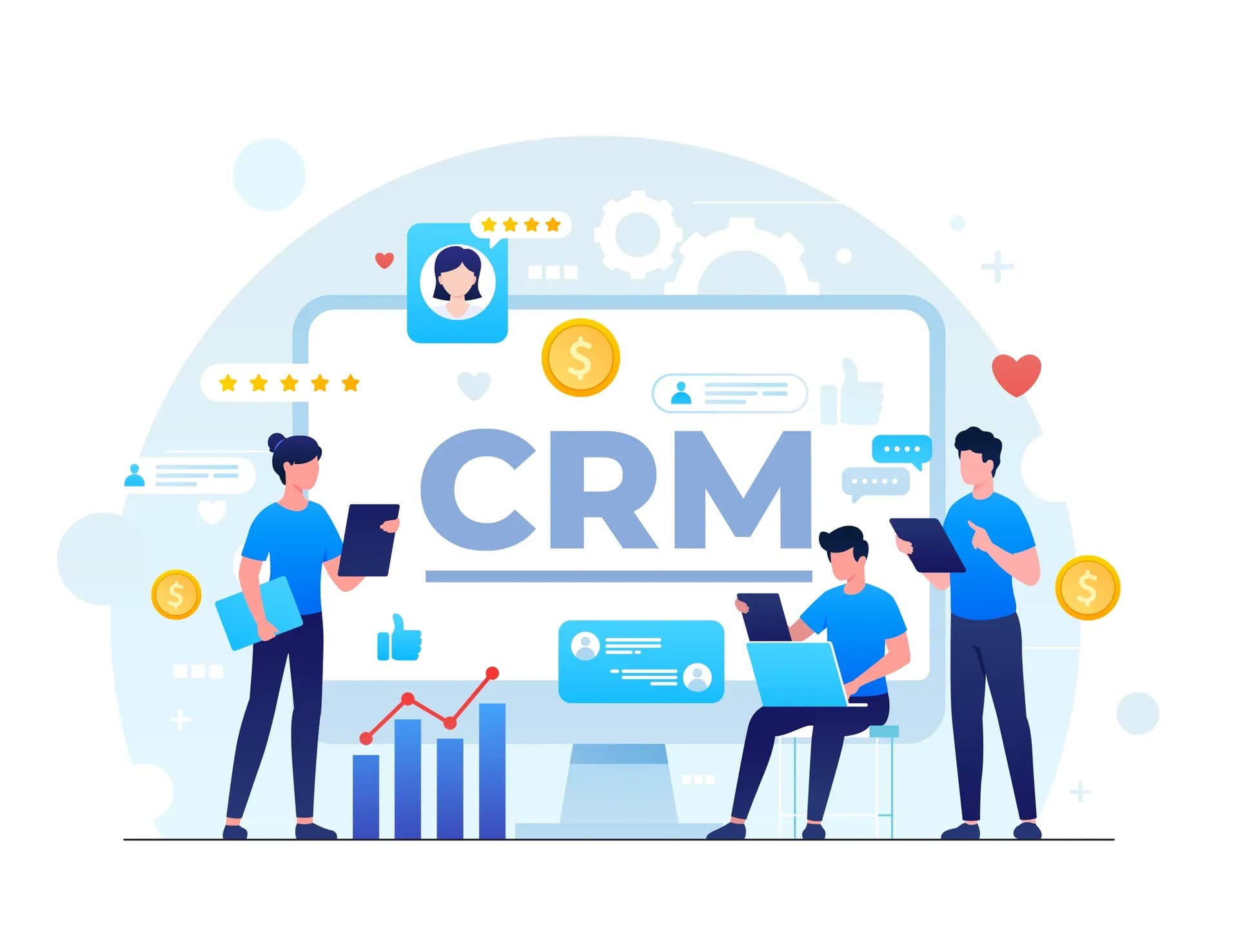
Integration with a CRM lets you see the full picture of customer interactions and automate sales and marketing.
An integration example: an online store admin panel + Bitrix24 CRM = automatic customer segmentation, personalized offers, automatic LTV calculation.
2. Payment systems
Secure integration with payment gateways is a necessity for any online business.
An integration example: a subscription service admin panel + Liqpay = automatic charging, invoice generation, debt tracking.
3. Analytics systems
Data is the oil of the 21st century, and analytics is the engine that turns that data into profit.
An integration example: an admin panel + Google Analytics + Power BI = detailed analysis of user behavior, conversions and marketing campaign ROI.
4. Warehouse and logistics systems
For a business with physical goods, synchronizing online sales with the warehouse is critical.
An integration example: an e-commerce admin panel + BAS + Nova Poshta = automatic stock updates, waybill creation, shipment tracking.
Custom development vs ready-made solutions: what to choose?
This is one of the most important decisions you'll have to make when choosing an admin panel. Each approach has its own advantages and disadvantages.
Ready-made solutions (SaaS, boxed products)
Advantages:
- Quick implementation (from a few days to a few weeks)
- A lower initial cost
- Regular updates from the developer
- No need for an in-house IT team
- Proven functionality
Disadvantages:
- Limited customization
- Possible problems integrating specific business processes
- Dependence on the vendor (vendor lock-in)
- Potentially higher long-term costs (subscription)
Ideal for: small and medium businesses with typical business processes, startups, companies with a limited IT budget.
Custom development with a reliable partner
Advantages:
- Full fit with your company's business processes
- Unique features unavailable in ready-made solutions
- Full control over the product's development
- The chance to create a competitive advantage
- No regular license payments
How we approach custom development:
- Systematic planning — we minimize risks through detailed design
- Phased development — you see intermediate results and can make adjustments
- Comprehensive testing — we guarantee the stability and security of the system
- Team training — we ensure your employees adapt quickly
- Technical support — we support the system after launch
Ideal for: businesses with unique processes, companies seeking to create a competitive advantage through automation, and enterprises with specific security and integration requirements.
"If your business has special processes or you want to gain a technological edge over competitors, custom development with an experienced partner will be the best solution. Our agency will help create exactly the system that meets your unique needs."
Top 5 mistakes when implementing admin panels
1. Overcomplication
Symptoms: the system is overloaded with features nobody uses; employees avoid working with the panel; training takes weeks.
Solution: follow the MVP (Minimum Viable Product) principle — start with the minimum necessary functionality and gradually add new capabilities based on real usage.
2. Ignoring staff training
Symptoms: a low level of system adoption, constant user errors, "shadow" processes outside the system.
Solution: invest in quality training and support. Develop clear instructions, run training sessions, build a knowledge base.
Case: the company "Ukrposhta", when introducing a new admin panel, created a special training center and an internal certification system, which achieved 92% adoption of the system by staff in the first 3 months.
3. Insufficient flexibility
Symptoms: constant requests for rework, being unable to respond quickly to changes in business processes, delays in launching new products.
Solution: choose modular solutions with an open API that can be easily extended and adapted.
4. Skimping on security
Symptoms: data leaks, loss of access, fraudulent actions in employees' names.
Solution: introduce a multi-level security system with regular audits and train staff in cybersecurity basics.
5. No usage analytics
Symptoms: being unable to assess the system's effectiveness, not knowing which functions are used and which aren't.
Solution: introduce a system for monitoring admin panel usage, analyze the metrics regularly and optimize the system based on real data.
Admin panel development trends: what awaits us tomorrow?
1. AI and machine learning
Artificial intelligence is turning admin panels from management tools into strategic advisors. AI assistants analyze data, suggest solutions and automate routine tasks.
Example: an online store admin panel that automatically optimizes prices based on demand, competition and margins; forecasts sales and places orders with suppliers without human involvement.
2. No-code/low-code platforms
The ability to create and modify admin panels without programming is a trend that makes technology accessible to non-technical specialists.
Example: Bubble.io, Retool, OutSystems — platforms that let business analysts create and configure admin panels using visual tools.
3. Voice and chat interfaces
Traditional graphical interfaces are being supplemented by voice and text commands, which makes interacting with the system more natural and effective.
Example: an admin panel where a manager can get a sales report simply by asking: "What were last week's sales by region?" or create a new task with the command: "Create a task for Olena: prepare a presentation for client ABC by Friday".
4. Edge computing and decentralization
Processing data closer to where it originates increases speed and system resilience.
Example: a store chain admin panel that keeps working even without an internet connection and synchronizes with the central database once the connection is restored.
5. AR/VR interfaces
Virtual and augmented reality open up new ways of interacting with data and running a business.
Example: a warehouse management admin panel where a manager, using AR glasses, sees the real warehouse with overlaid information about products, their quantity and popularity, and can manage processes with gestures.
Conclusion: an admin panel as a strategic investment from a professional digital agency
An admin panel isn't just a technical tool but a strategic investment in your business's development. A properly designed and implemented system becomes a competitive advantage that lets you:
- Optimize operational processes — cutting costs and raising efficiency
- Improve the customer experience — responding to customers' needs faster and better
- Make well-founded decisions — based on real data and analytics
- Adapt to change — quickly introducing new business models and processes
- Scale the business — without a proportional rise in administrative costs
Remember: in the era of digital transformation it's not the business that chooses technology, but technology that determines which business will survive tomorrow. And an admin panel isn't just an interface but your company's nervous system, uniting all processes into a single organism.
Why choose our agency to develop your admin panel?
As a Ukrainian digital agency with extensive experience in development, design and branding, we offer:
- Full control of the project at every stage — from architecture planning to final delivery
- Systematic checks and constant feedback — a guarantee of high quality in the final product
- Strict adherence to development deadlines — priority #1 for our project teams
- A comprehensive approach — we don't just create a technical solution, we develop an intuitive interface and a convenient management system
Our team will help you create an admin panel that perfectly meets your business's needs — from a basic solution to a comprehensive enterprise management system.
Ready to get started?
If you're planning to introduce an admin panel in your business, get in touch for a free consultation. We'll help you:
- Analyze your business processes and set priorities for automation
- Form clear requirements for functionality and the necessary integrations
- Propose the optimal solution that meets your needs and budget
- Draw up a detailed implementation plan with clear stages and deadlines
- Deliver the project turnkey with subsequent support and development of the system
Fill in the contact form or call us to discuss which admin panel will suit your business best!