Remember how, just a few years ago, communication with customers happened exclusively by email or phone? And answers to questions could take hours or even days? Today we live in an era of instant answers, and chatbots for business are changing the rules of the game in the customer service market. But why have these smart helpers become so important right now and how can they help your business specifically? Let's figure it out!
What are chatbots and how do they work?
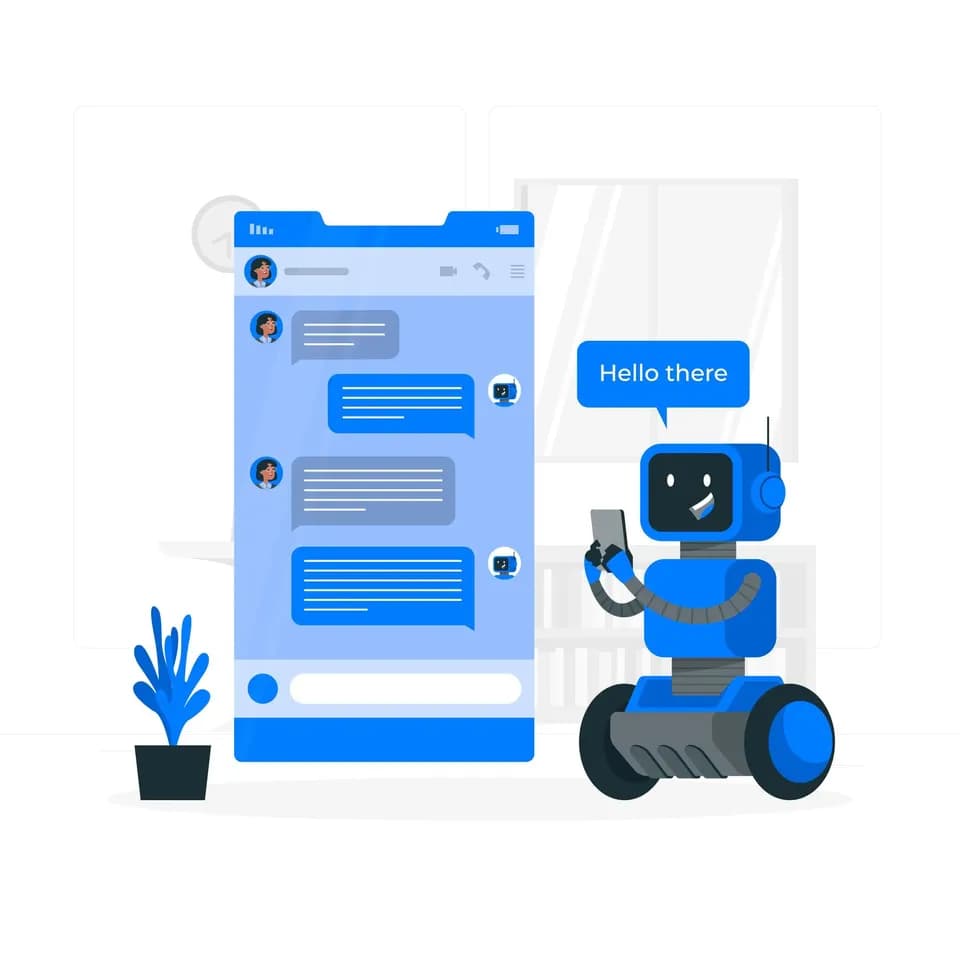
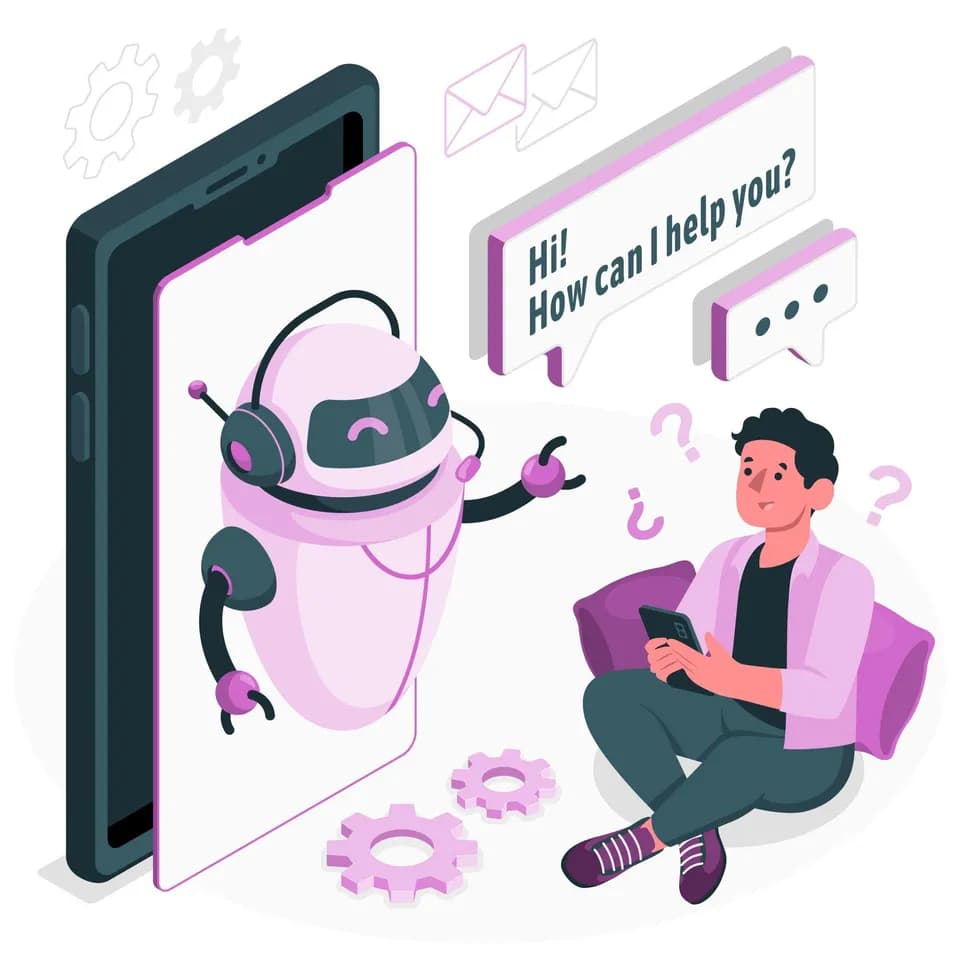
A chatbot is a program that simulates a conversation with a person through text or voice interfaces. Modern business bots work on the basis of artificial intelligence, machine learning and natural language processing, which lets them "understand" customers' requests and give relevant answers.
Imagine: a customer visits your site at 3 a.m. and wants to find out about order delivery. Instead of waiting until morning, they get an answer instantly — all thanks to a chatbot for business.
Types of chatbots used in business:
- Simple rule-based bots — work according to pre-written scenarios
- AI bots — use artificial intelligence to understand the context of the conversation
- Hybrid solutions — combine automation with the ability to hand complex requests over to live operators
7 solid reasons why chatbots matter for your business
1. Round-the-clock customer support at no extra cost
Who doesn't dream of a support team that works 24/7/365? Business bots make this possible without increasing the payroll. According to Juniper Research, by 2023 chatbots had helped businesses save more than 8 billion dollars in customer service costs.
"Introducing a chatbot let us cut the workload on the support service by 35% and raise customer satisfaction by 28%" — shares Oleksandr, the owner of an electronics online store.
2. Instant request processing raises conversion
Do you know how many customers you lose because of slow replies? According to Harvard Business Review, companies that respond to inquiries within 5 minutes are 21 times more likely to qualify leads than those that respond after 30 minutes.
Chatbots in business provide instant answers, which significantly raises the chances of converting a visitor into a customer.
3. Personalization at a new level
Modern AI bots for business analyze the history of interaction with a customer and give personalized recommendations. It's like your favorite barista remembering that you order a decaf latte every morning, only in digital form.
4. Collecting valuable customer data
Every conversation with a business bot is a source of insights about your customers:
- What questions do they ask most often?
- At which stage of the sales funnel do difficulties arise?
- Which products generate the most interest?
This data is invaluable for optimizing business processes and marketing strategies.
5. Fewer human errors
We're all human and we all make mistakes. Chatbots don't have bad days, don't get distracted and always follow service protocols, which ensures consistently high communication quality.
6. Scalability at no extra cost
During seasonal peaks or marketing campaigns the volume of requests can grow many times over. Chatbots for business handle 10 and 10,000 simultaneous requests equally effectively, with no need to hire additional staff.
7. Integration with other business tools
Modern business bots integrate with CRM systems, payment gateways, databases and other tools, which makes it possible to automate not only communication but also many business processes.
How to implement a chatbot in your business: a practical guide
Step 1: define the goals of implementation
Before choosing a solution, answer these questions:
- What do you need a chatbot for?
- Which processes do you want to automate?
- What result do you expect to get?
Step 2: choose the right solution
Depending on your needs and budget, you can choose:
- A ready-made platform (Tidio, ManyChat, Chatfuel) — quick implementation, limited functionality
- A custom solution — development for the business's specific needs
- AI platforms (ChatGPT, Claude) — cutting-edge technology, higher cost
Step 3: develop interaction scenarios
Think through the main paths of a customer's interaction with the business bot:
- The most common questions and their answers
- Checkout scenarios
- Procedures for resolving typical problems
Step 4: integrate with existing systems
For maximum effectiveness, the chatbot should be integrated with:
- The CRM system
- The order management system
- The company knowledge base
- Analytics tools
Step 5: test and improve
Launching a chatbot is only the beginning. Regularly analyze:
- Which questions the bot couldn't handle
- Where customers "drop out" of the conversation
- Which scenarios need refinement
Real success stories: how chatbots are changing business
Case #1: a clothing online store
A Ukrainian clothing brand introduced a chatbot for business that helps choose a size based on the customer's measurements. The result: returns fell by 27% and average order value rose by 15%.
Case #2: a travel agency
The agency introduced an AI bot that picks tours based on customers' wishes and answers basic questions. The result: the number of processed requests grew by 300% with the same staff.
Case #3: the banking sector
One of the Ukrainian banks integrated a chatbot into its mobile app to handle customers' typical questions. The result: 65% of requests are resolved without operators, and the wait time for an answer fell from 15 minutes to 30 seconds.
Challenges of implementing chatbots and how to overcome them
Challenge #1: staff resistance
Employees may fear that business bots will replace them. Solution: explain that the bot takes over routine tasks, letting people focus on the more complex and interesting aspects of the job.
Challenge #2: limited understanding of context
Even modern AI bots sometimes don't understand complex requests. Solution: implement an escalation mechanism to a live operator for non-standard situations.
Challenge #3: development and maintenance costs
Custom solutions can be expensive. Solution: start with ready-made platforms that can scale as the business grows.
Chatbot development trends: what awaits us in the future?
- Multimodal bots — interaction through text, voice and video
- Emotional intelligence — recognizing the customer's mood and adapting the communication style
- Proactive bots — anticipating the customer's needs based on behavior analysis
- Integration with AR/VR — virtual consultants in the metaverse
Conclusion: chatbots are not a luxury but a necessity
In an era when speed and quality of service become key factors in choice, chatbots for business are turning from a nice addition into a mandatory tool. They not only optimize costs but also raise customer satisfaction, collect valuable data and provide a competitive advantage.
Is your business already using the potential of chatbots? If not, perhaps now is the time to think about implementing them?
Want to learn more about implementing chatbots in your business? Request a consultation or look at our cases.