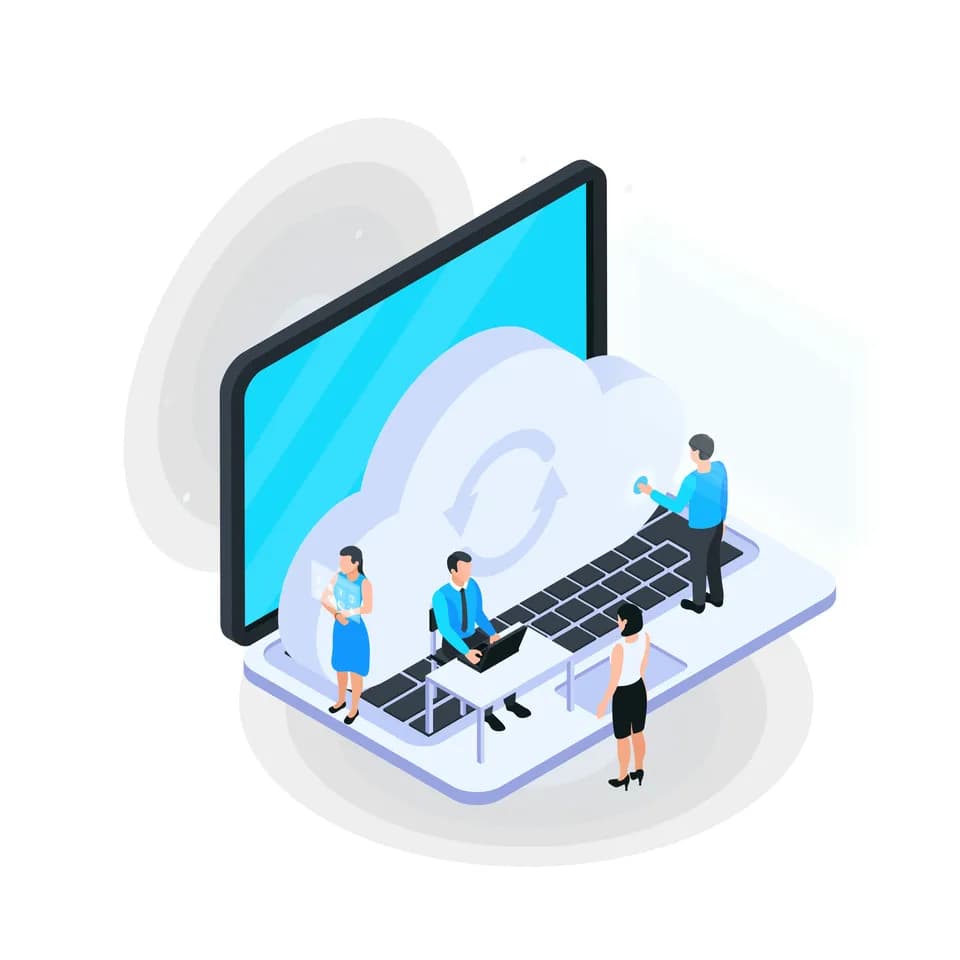
The cloud isn't about IT, it's about survival and scaling
Imagine the internet goes down in the office. And with it — the CRM, email, the customer database. A contractor broke something, the server crashed, and people can't work.
Dozens of companies worked like that just a few years ago. But today it's not only inconvenient — it's dangerous for business.
Cloud services let you work from anywhere without being tied to "hardware", an office or a single specialist.
This article is a simple and honest look at why the cloud isn't a buzzword but a strategic advantage.
What are cloud solutions?
In simple words: instead of storing files, programs or services on one computer or server, you use resources hosted in a cloud data center (on the servers of Amazon, Google, Microsoft and others).
Examples of cloud solutions you definitely know:
- Google Docs / Drive
- Dropbox
- Zoom
- Notion, Trello, Asana
- CRMs such as Pipedrive and Bitrix24
- Online stores on Shopify or marketplaces
Advantages of cloud solutions for small and medium businesses
☁️ 1. Savings on infrastructure
- No need to buy and maintain servers.
- No spending on electricity, PC units or support.
- All updates are automatic.
The cloud = renting a service, not owning a problem.
🚀 2. Scalability without the headache
You can:
- start with the basic plan,
- add users in 1 minute,
- move up to more capacity in 2 clicks.
Growth of the team or load doesn't require new equipment.
🔒 3. Security you don't have to think about every day
- Backups are automatic.
- Protection against hacking — at the level of Google / Amazon data centers.
- Access can be restricted flexibly: who views, who edits.
In most cloud solutions the level of security is higher than on a small business's local servers.
🌍 4. Work from anywhere in the world
- A remote team? Easy.
- Traveling? Access from your phone or laptop.
- Need to give a new employee access? No computer setup.
The cloud is the foundation of a flexible, mobile company.
🛠 5. Minimal dependence on specific people
If the IT guy goes on vacation or quits, there's no need to hunt for "where his FTP server password is".
Everything is centralized. And that means more control for the owner or manager.
📈 6. It's easier to launch new projects
Want to open another line of business or launch an MVP product?
- Hosting is not a problem.
- The infrastructure is already there.
- Setup — a few hours instead of weeks.
That's why cloud solutions are often used by startups and fast-growing companies.
A practical example: how the cloud saved a business from downtime
The client is a delivery service with 18 employees, a website, a CRM and a mobile app.
They ran on their own server. On the day of a promotional campaign the server "went down" — they served customers manually, lost some orders and damaged their image.
What we did:
- moved the infrastructure to Google Cloud;
- set up automatic scaling under peak load;
- integrated backups and monitoring.
📈 Result:
- load speed +38%,
- zero downtime in 6 months,
- the client saved on a system administrator.
Frequently asked questions from business owners
❓ Isn't it too expensive?
The cloud is like renting an office: you pay for the space you use.
And you know the cost exactly every month.
Compared with your own servers it's several times cheaper at the start and costs less to maintain.
❓ What if we lose control over our data?
Most cloud solutions have flexible permission management.
You can:
- clearly distribute access by role,
- see user activity,
- encrypt important data.
❓ Won't it get hacked?
Nobody can give a 100% guarantee, but large cloud providers invest millions of dollars in security. Your local system is most likely less protected.
How to move to the cloud: simple steps
- Analyze which services you already use (CRM, documents, email, hosting).
- Assess what can be replaced with a cloud solution (for example, Google Workspace instead of local document sharing).
- Choose a provider: AWS, Google Cloud, DigitalOcean or ready-made solutions (Tilda, Bitrix24, Shopify).
- Consult a technical partner so you can migrate everything without risk.
- Train the team how to work with the new system — and write down the access credentials 😅
Conclusion
Cloud solutions aren't just "convenient". They are:
- safer,
- more flexible,
- more profitable for a business that doesn't want to drown its budget in "hardware".
The cloud is when your business isn't tied to cables, an office or a single IT person. And that gives freedom.