Ever wondered why some products take off and others fail despite similar technical specifications? The secret often lies in quality prototyping. Creating prototypes before full development isn't just a fashionable trend in the IT industry but a critically important stage that can determine your product's fate. In this article we'll look at why working with prototypes should become an integral part of your development process, what advantages it gives and how to introduce prototyping into your workflow properly.
What is prototyping and why is it needed?
Prototyping is the process of creating a preliminary version of a product to test concepts, ideas and functionality before full development. In essence it's like a "rough draft" of the future product that lets you see how it will work without spending resources on full development.
Remember the last time you bought something through an inconvenient site or app? You were probably left with a feeling of irritation. Now imagine how much money the company spent developing this product that drives users away! Working with prototypes before development could have prevented such problems.
The main types of prototypes
- Paper prototypes — the simplest and cheapest form, ideal for initial ideas
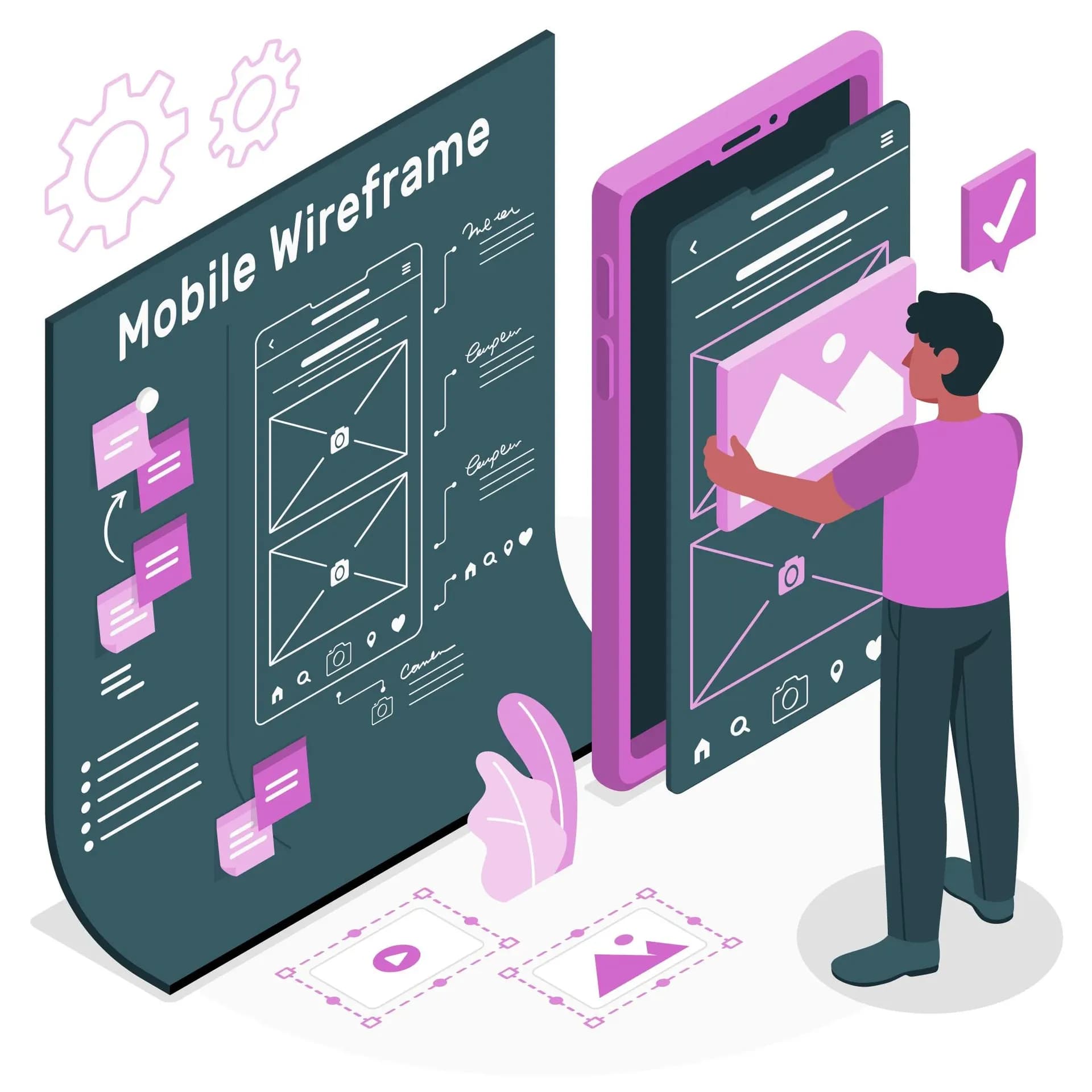
- Wireframes — a schematic representation of the interface without design detail
- Interactive prototypes — clicks and interactions simulating real functionality
- MVP (minimum viable product) — a working version with basic functionality
Key advantages of prototyping before development
Saving time and budget
What do you think is cheaper: making changes to a prototype or reworking a finished product? The answer is obvious! Prototyping in development lets you find problems at early stages, when the cost of fixing them is minimal.
According to research, fixing an error at the prototype stage can cost 10–100 times less than after the product launches. For example, IBM saved about $100 million by introducing a prototyping process before developing its software products.
A better understanding of user needs
Working with prototypes makes it possible to collect real feedback from potential users. Have you ever developed a feature that seemed brilliant but users ignored it? That's a classic example of why it's important to test ideas on prototypes.
"We lost 6 months of work because we thought we knew what users wanted. If we'd started with a prototype, we'd have understood their real needs within a few days." — Oleksandr, a product manager at an IT company
Lower risk of project failure
The statistics are disappointing: about 70% of IT projects don't achieve their goals. Prototyping before full development significantly lowers this risk by giving you the chance to "fail fast and cheap".
How to introduce prototyping into the development process properly

Defining the prototype's goal
Before creating a prototype, define clearly:
- What exactly do you want to test or demonstrate?
- Who is your target audience?
- What level of detail is needed?
Choosing the right prototyping tools
Depending on the project type and development stage, different tools can be used:
For UI/UX design:
- Figma
- Adobe XD
- Sketch
For web development:
- HTML/CSS prototypes
- Bootstrap Studio
- Webflow
For mobile apps:
- Marvel
- InVision
- Proto.io
Organizing the prototype testing process
Effective prototyping during development is impossible without quality testing:
- Involve real representatives of the target audience
- Create test scenarios that match users' typical tasks
- Document all observations and feedback
- Analyze the results and make improvements to the prototype
Real examples of successful prototyping
The Dropbox story
Do you know how Dropbox convinced investors of its idea's viability? Instead of developing a full product, the founder created a simple prototype in the form of a video demo. That video collected thousands of beta-testing sign-ups and attracted investors' attention, saving months of development.
An example of a Ukrainian startup
The Ukrainian startup Petcube, which created an interactive camera for pets, first tested the concept on a simple prototype. This let them raise $250,000 on Kickstarter and avoid costly mistakes in product design.
Typical prototyping mistakes

An overly detailed prototype
Remember: the purpose of a prototype is to test the concept, not to create a finished product. Excessive detail takes time and blurs the focus of testing.
Ignoring negative feedback
Sometimes it hurts to hear criticism of your idea, but that is exactly the value of prototyping before development — better to learn about problems now than after months of work.
Prototyping for different types of projects
Websites and apps
For web projects, working with prototypes lets you:
- Optimize user journeys
- Test the information architecture
- Test responsiveness on different devices
Software
In software development, prototyping helps to:
- Determine the optimal architecture
- Test integrations with other systems
- Evaluate the performance of key functions
Hardware solutions
In hardware product development, prototyping is critical for:
- Checking ergonomics and design
- Testing how components interact
- Evaluating manufacturing processes
Conclusions: an investment that always pays off
Working with prototypes before development is an investment that always pays off. It lets you:
- Save time and money
- Understand user needs better
- Lower the risk of project failure
- Create higher-quality products
Do you already use prototyping in your development process? Which tools and approaches work best for you? Share your experience in the comments and let's improve our development processes together!
Want to learn more about effective development methods? Subscribe to our blog and get useful tips for your business or startup. And if you need a consultation on prototyping and development, contact our experts through the contact form.